April 2026 - You Didn’t Miss It…
You Didn’t Miss It. You Just Didn’t Trust It. Yet…
What’s Been Changing Without You Noticing
Over the past three months, we’ve talked about orientation, action, and what you feed your thinking.
If you’ve been following along, something subtle may have started to shift. Not in your calendar. Not in your strategy. Not even in your execution. In how you see.
You’re noticing more. Not dramatically. Not all at once. But in small, quiet ways.
A detail that feels slightly out of place. A pattern that repeats just enough to be interesting. A question that surfaces—but doesn’t fully form.
And just as quickly… it passes.
Most of those moments don’t feel important enough to interrupt your day. They don’t come with urgency. They don’t demand attention. They don’t prove themselves useful in the moment.
So they get filtered out—quietly, efficiently—along with everything else that doesn’t immediately move the work forward.
And over time, that filtering becomes automatic.
A Pattern Seen Outside the System
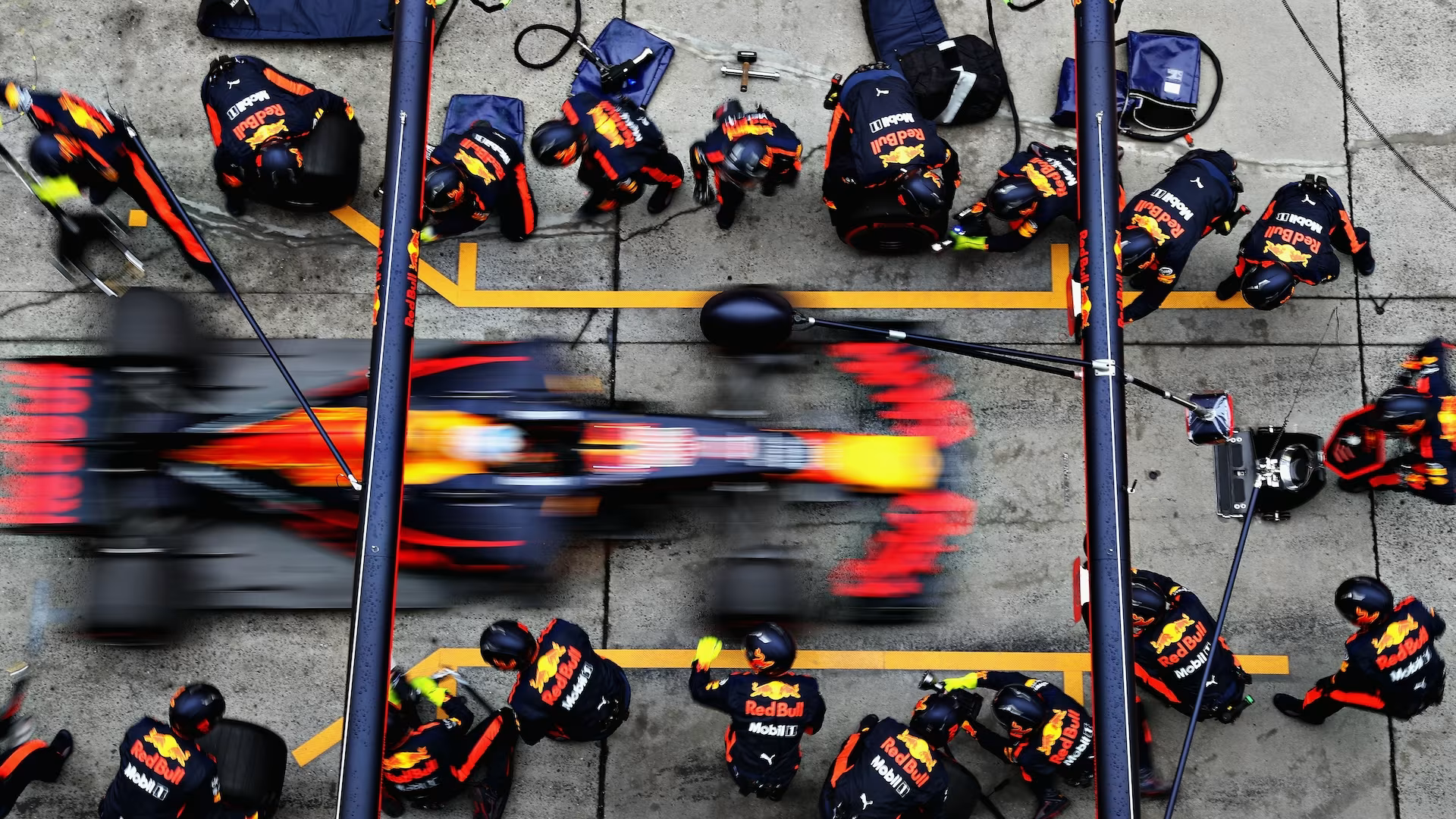
Several years ago, a group of doctors faced a frustrating problem. In hospital operating rooms, surgical teams were highly skilled, highly trained, and deeply experienced.
And yet, patients were still being put at risk—not because of a lack of knowledge or effort, but because of breakdowns during transitions.
When one team handed off to another, small miscommunications created big consequences. Everyone was doing their job. But something wasn’t working.
Then something interesting... Instead of continuing to refine protocols within healthcare, one team looked somewhere unexpected.
Formula 1 racing.
During a race, a pit crew has 2 to 2.5 seconds—not minutes—to execute a flawless sequence of actions. Every movement is precise. Every role is clear. Every transition is intentional.
There is no room for confusion. No tolerance for misalignment. And most importantly—no assumption that “everyone already knows.”
Someone saw the parallel. Not perfectly. Not completely. But enough to ask a different question:
Could surgical teams approach handoffs the way pit crews approach pit stops?
That thought—subtle, easy to dismiss—changed everything. Hospitals began redesigning how teams communicated during transitions. Clear roles. Defined sequences. Explicit communication. Nothing left to chance. Everyone on the same frequency, simultaneously.
The result?
Fewer errors.
Safer outcomes.
Better coordination.
That breakthrough came from someone in the system noticing something outside of it—and trusting that it might be relevant. Not because they were told to look there. Not because it was part of a formal process. Because they were willing to take something that didn’t obviously belong… and hold onto it long enough to see if it might.
This is how insight actually shows up. Not as a fully formed idea. Not as a clear directive. But as a moment.
A flicker.
It rarely announces itself as insight. It shows up as something slightly off. Slightly interesting. Slightly unresolved. Just enough to notice.
Not enough to prioritize—unless you choose to.
The Signals Most Leaders Move Past
You’ve had those moments. Not the obvious red flags everyone sees. The quieter ones.
The meeting that feels “on track”… but oddly constrained—like the team is solving the problem correctly, just not the right problem.
The strategy that looks solid on paper… but feels overly familiar, as if you’ve seen it before in a different form.
The competitor move that doesn’t look threatening… but resembles one that’s disrupted another industry entirely.
The internal process that works… but requires an unusual amount of explanation to justify why it works.
These aren’t problems screaming for attention. They’re signals.
Peripheral signals.

And most leaders don’t ignore them on purpose. They simply don’t assign them enough value to act.
Value, in most environments, is assigned to what’s clear. What’s measurable. What’s already been validated. Not to something that only exists as a possibility.
Where the Difference Begins
Innovative leaders don’t see more because they’re special. They see more because they’ve learned to trust what they notice before it’s obvious.
They don’t wait for complete clarity. They don’t require full validation. They don’t need consensus before curiosity. They treat those small moments as worth exploring.
Even when they can’t explain why. Even when it slows them down. Even when it leads nowhere—most of the time. Because occasionally… it leads somewhere no one else was looking.
What No One Taught You to Do
This is where most leadership development falls short. You’re trained to:
analyze data
execute plans
communicate clearly
drive results
All critical, but almost no one teaches you how to:
Pause on something that doesn’t fit. Stay with a question that hasn’t fully formed. Explore a connection that feels incomplete.
So you move on because you’re efficient. And, over time, efficiency trains you to execute, not explore peripheral things that drive innovation. It conditions you to prioritize what’s proven over what’s possible.
The more successful you become, the stronger that conditioning gets.
A 30-Second Shift

The next time something catches your attention—something small, subtle, easy to dismiss—don’t rush past it. Not yet. Stay with it. A little longer than you normally would. Even 30 seconds can make a difference.
Ask yourself:
What is this similar to?
What might this mean if I’m right?
Where else have I seen this pattern?
You’re not trying to be right in that moment. You’re training yourself to stay with what others move past.
You don’t need certainty or proof. You just need to treat the moment as meaningful enough to explore. Because the difference isn’t always that innovative leaders see things others don’t. It’s that they don’t require those things to be obvious before they matter.
See?
You didn’t miss it.
You noticed it.
Now, explore it ...
30 more seconds.
The Signals Are Already There
Most leaders are moving too quickly to notice what doesn’t demand attention. The advantage doesn’t go to the fastest. It goes to the ones who notice… and pause.
The world isn’t hiding a secret path from you. It’s showing you signals—small, incomplete, easy to overlook.
Signals right here in the periphery.
The question is: Will you keep moving… or will you start following what you see?
Until next time, I’ll be looking for you in the periphery... hopefully exploring what you see.
— Paul
One More Thing(s)
🧠 Rent My Brain
This isn’t your typical consulting, coaching, or workshop engagement. Rent my Peripheral Thinking™ brain for a few hours. Whatever is top of mind or that persistent issue. We’ll talk, and I’ll do the Peripheral Thinking for you.
Click the link, select “Advisory,” fill in the fields, and I’ll contact you.
🎤 Book me to speak
From executive retreats to 10,000-attendee conferences... Always personalized for your audience and packed with Peripheral Thinking™ skills and tools to use that day and every day after!
Let’s discuss how I can make your event the one people talk about for years.
© 2026 Paul Daniels, Jr & Peripheral Thinkers™ | Image Credits: Image Creators.